
Creating a more sustainable kitchen doesn’t require a complete lifestyle change. Small, thoughtful choices—such as replacing disposable products with Eco-Friendly Kitchen reusable alternatives and choosing durable kitchen tools—can help reduce everyday waste.
From bamboo cutting boards to reusable food storage bags, many eco-friendly kitchen products are designed to make cooking, meal preparation, and food storage more convenient while encouraging more mindful consumption.
At Organical, we believe that natural living starts with practical everyday choices. In this guide, we’ll explore 15 sustainable kitchen products worth considering, including their potential benefits, what to look for when shopping, and how to choose options that suit your home.
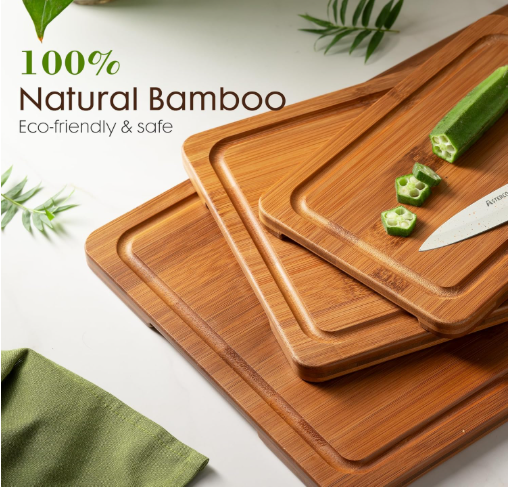
1. Astercook Deep-Carbonized Bamboo Cutting Boards
A cutting board is one of the most frequently used tools in any kitchen. Choosing a durable board made from bamboo can be an appealing option for people looking for alternatives to conventional plastic cutting boards.
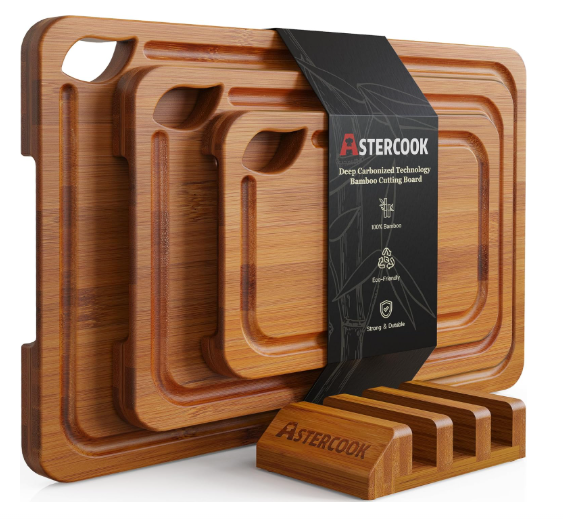
The Astercook Deep-Carbonized Bamboo Cutting Boards set is designed for chopping, food preparation, and serving. It includes reversible cutting boards, a wood storage stand, juice grooves, and easy-grip handles.
Key Features
- Bamboo construction: Bamboo is a rapidly renewable plant, making responsibly sourced bamboo an appealing material for kitchen products.
- Reversible design: The boards can provide different surfaces for food preparation and serving, depending on their design and condition.
- Juice grooves: Grooves help collect some liquids released when cutting juicy ingredients.
- Easy-grip handles: Handles can make lifting and moving the boards more convenient.
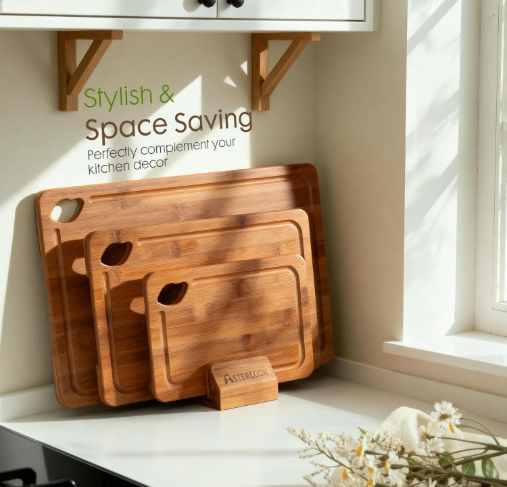
- Storage stand: The included stand helps keep the boards organized when they are not in use.
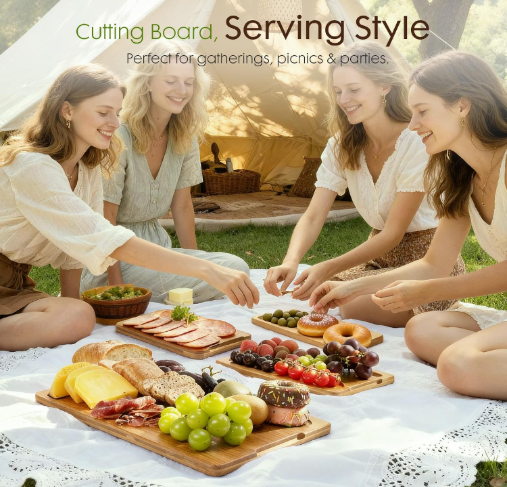
- Charcuterie and chopping use: The boards can serve as food-preparation surfaces and attractive serving boards for cheese, fruit, bread, and snacks.
Why Consider Bamboo Cutting Boards?
Bamboo cutting boards offer a renewable-material alternative to many conventional plastic options. A well-maintained bamboo board can be useful for everyday chopping, slicing, and serving.
However, bamboo is not automatically more sustainable in every situation. Manufacturing methods, adhesives, transportation, product lifespan, and responsible sourcing also matter. Look for clear information about materials and construction before purchasing.
How to Care for Bamboo Cutting Boards
To help maintain your bamboo boards:
- Wash them by hand with mild dish soap and water.
- Avoid soaking them or leaving them submerged in water.
- Dry both sides thoroughly after washing.
- Follow the manufacturer’s instructions for conditioning or oiling.
- Avoid placing them in the dishwasher unless the manufacturer explicitly states they are dishwasher-safe.
- Use a separate board or appropriate food-safety practices when preparing raw meat and ready-to-eat foods.
Best for: Home cooks who want a versatile chopping and serving board set with organized storage.
Our recommendation: Consider the Astercook set if you want bamboo boards for routine food preparation and serving. Before buying, verify the current dimensions, materials, number of boards, care instructions, and customer feedback on the retailer’s product page.
[Check Price on Amazon] — https://amzn.to/4i9VA6U
2. Reusable Silicone Food Storage Bags
Disposable plastic bags are convenient, but they can create recurring waste. Reusable silicone food storage bags offer an alternative for storing snacks, chopped vegetables, leftovers, and other suitable foods.
Benefits
- Reusable for many storage tasks.
- Useful for meal preparation and portioning.
- Available in different sizes.
- Can help organize food in the refrigerator or freezer when rated for those uses.
What to Look For
Check whether the bags are made from food-contact-safe materials, whether they are suitable for your intended temperatures, and whether they are easy to clean and dry completely.
Best for: People who regularly store snacks, ingredients, and leftovers.
3. Glass Food Storage Containers
Glass containers can be useful for storing leftovers, prepared meals, and pantry ingredients. They are reusable, do not readily absorb food odors, and allow you to see what is inside.
Benefits
- Suitable for repeated use.
- Easy to inspect and clean.
- Useful for meal preparation and refrigerator storage.
- Available with different lid materials and sizes.
Choose containers with secure-fitting lids and check whether the glass and lids are suitable for the oven, microwave, freezer, or dishwasher before using them in those conditions.
Best for: Meal planners and households that frequently store leftovers.
4. Bamboo Kitchen Utensils
Bamboo spoons, spatulas, and turners can be useful alternatives to some plastic kitchen utensils. They are lightweight and can be comfortable to handle.
Choose smooth, well-finished utensils and follow the manufacturer’s cleaning instructions. Avoid leaving them soaking in water, as prolonged moisture can damage the material.
Best for: Everyday stirring, mixing, and serving.
5. Stainless-Steel Water Bottles
A reusable stainless-steel water bottle can reduce reliance on disposable bottled water when you refill and use it regularly.
Look for durable construction, a leak-resistant lid, convenient cleaning access, and insulation if you want to keep drinks hot or cold.
Best for: Commuters, students, travelers, and people who carry water throughout the day.
6. Reusable Beeswax Food Wraps
Beeswax wraps are fabric wraps coated with beeswax and other ingredients, depending on the manufacturer. They can be used to cover some bowls or wrap suitable foods.
They are not suitable for every food or storage condition. Follow the manufacturer’s guidance, particularly regarding raw meat, high temperatures, and cleaning.
Best for: Covering certain foods and bowls as an alternative to some disposable wraps.
7. Reusable Produce Bags
Reusable produce bags can help carry fruits and vegetables from the store and organize them at home.
Cotton, mesh, and other washable options are available. Choose bags that are easy to wash and dry, and consider whether their weight and material are appropriate for the produce you buy.
Best for: Grocery shopping and organizing fresh produce.
8. Reusable Coffee Filters
If you make coffee at home, a reusable filter may reduce the need for disposable paper filters.
Options include stainless-steel mesh and washable fabric filters. They can produce different flavors and textures, so choose one that suits your brewing method.
Best for: People who brew coffee regularly.
9. Compost Bins for Kitchen Scraps
A kitchen compost bin provides a dedicated place to collect suitable fruit and vegetable scraps, coffee grounds, and other compostable materials.
A countertop bin can help organize food scraps before you transfer them to a suitable composting system. Check local composting options and the bin manufacturer’s instructions.
Best for: Households that compost and want to manage food scraps more conveniently.
10. Cellulose Kitchen Sponges
Cellulose sponges are made using plant-derived cellulose and can be an alternative to some conventional synthetic sponges.
Product composition varies, so check whether a sponge contains synthetic materials or additives. Keep sponges clean, allow them to dry between uses, and replace them when worn or unhygienic.
Best for: Everyday dishwashing and general kitchen cleaning.
11. Reusable Cleaning Cloths
Washable kitchen cloths can replace many single-use paper towels for wiping counters, cleaning spills, and drying surfaces.
Cotton and other washable fabrics are common options. Keeping separate cloths for different cleaning tasks can help maintain good kitchen hygiene.
Best for: Households that regularly clean kitchen surfaces.
12. Wooden Dish Brushes
A wooden-handled dish brush can be a practical addition to a low-waste cleaning routine. Some models have replaceable brush heads, potentially allowing you to replace the worn part rather than the entire tool.
Check the bristle material, replacement-part availability, and cleaning instructions before choosing one.
Best for: Washing dishes, scrubbing pots, and cleaning suitable kitchen surfaces.
13. Refillable Dish Soap Dispensers
A refillable dispenser can make it easier to reuse the same container instead of repeatedly purchasing new dispensers.
For a more sustainable setup, consider how the soap is packaged, whether refills are available locally, and how much packaging the overall system actually saves.
Best for: Keeping dishwashing supplies organized while reducing unnecessary packaging.
14. Reusable Silicone Baking Mats
Reusable baking mats can be an alternative to some disposable baking papers when used according to the manufacturer’s instructions.
They are available in different sizes and temperature ratings. Check the maximum permitted temperature, cleaning guidance, and suitability for your baking trays.
Best for: People who bake frequently and want reusable baking accessories.
15. Stainless-Steel Lunch Boxes
Reusable stainless-steel lunch boxes are useful for packing meals, snacks, and leftovers. They are durable and can replace disposable food containers in many situations.
Look for a suitable capacity, secure closures, easy-to-clean construction, and clear information about whether the box is leakproof or suitable for hot foods.
Best for: Work lunches, school meals, picnics, and travel.
How to Choose the Right Eco-Friendly Kitchen Products
You don’t need to purchase all 15 products at once. Start with the items you use most frequently and choose replacements when existing products wear out.
Here are five practical considerations:
1. Prioritize Reusability
Products that you can use repeatedly may reduce waste compared with disposable alternatives, particularly when you use them for a long time.
2. Check Material and Safety Information
Look for clear product specifications, food-contact suitability where relevant, and instructions for cleaning and temperature use.
3. Consider Durability
A product that lasts longer may provide better value than a cheaper alternative that needs frequent replacement.
4. Think About Cleaning and Maintenance
Reusable items should be practical to clean and dry. A product that is difficult to maintain may not suit your routine.
5. Compare the Full Cost
Consider the purchase price, expected lifespan, replacement parts, and ongoing maintenance rather than looking at the initial price alone.
Are Eco-Friendly Kitchen Products Worth It?
They can be, especially when they fit your daily routine and replace products you would otherwise repeatedly discard.
For example, reusable food containers may be useful if you regularly store leftovers, while bamboo utensils may make sense if you need new cooking tools. The environmental benefits depend on how the products are made, how long they last, and how they are used.
The most sustainable purchase is not always the newest product. Using what you already own for as long as it remains safe and functional is also a sensible choice.
Frequently Asked Questions
What are the best eco-friendly kitchen products for beginners?
Reusable water bottles, durable food containers, washable cleaning cloths, and reusable grocery bags are practical starting points for many households.
Are bamboo cutting boards environmentally friendly?
Bamboo grows relatively quickly and can be a renewable material. However, the overall environmental impact depends on sourcing, manufacturing, adhesives, transport, durability, and disposal.
Can bamboo cutting boards go in the dishwasher?
Many bamboo boards are not dishwasher-safe. High heat and prolonged moisture may cause warping, cracking, or damage. Always follow the manufacturer’s care instructions.
Do reusable kitchen products save money?
They can save money over time if they replace disposable products regularly and last long enough to offset their purchase price. Actual savings depend on usage and maintenance.
How can I make my kitchen more sustainable without spending much?
Start by reusing suitable containers you already own, carrying a reusable shopping bag, reducing food waste, and replacing disposable products only when necessary.
Final Thoughts
Creating a more sustainable kitchen is about making practical choices that work for your household. From the Astercook bamboo cutting board set to reusable storage bags, glass containers, and washable cleaning cloths, there are many products worth exploring.
Start with one or two useful changes, compare product specifications carefully, and prioritize items that are durable and easy to maintain.
At Organical, our goal is to help you discover practical products for more thoughtful everyday living—one choice at a time.
Affiliate Disclosure: As an Amazon Associate I earn from qualifying purchases. This website may earn commissions from qualifying purchases made through affiliate links, at no additional cost to you.